 EMZETT.
IRC
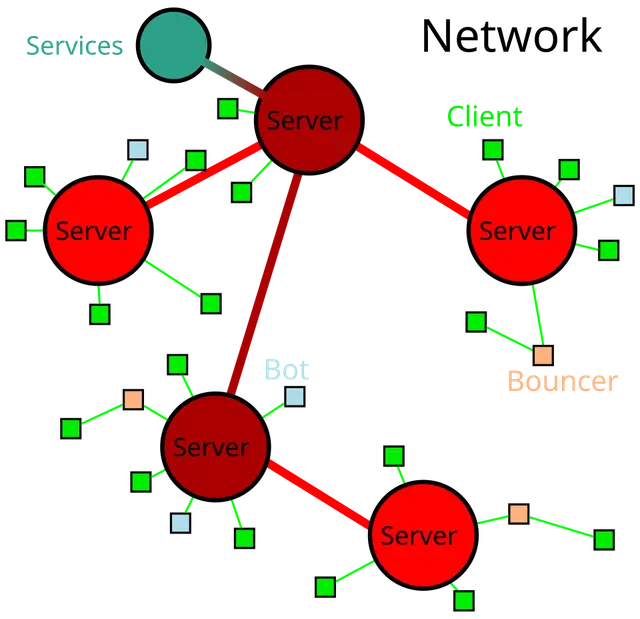 Image: User:D0ktorz, Public domain, Wikimedia Commons

In short: Internet Relay Chat — one of the oldest text chat protocols on the internet, organised into topic-based channels on central servers.
In more detail: Users connect to an IRC server, join channels (e.g. #support) and exchange messages in real time. Before modern services such as Slack or Discord, it was the de facto standard for community and developer chats; still used in many open-source projects today.
In Depth
The IRC protocol (specified in 1988) follows a simple text-based client-server model: the client connects to an IRC server via TCP and sends line-based text commands:
JOIN #examplechannel
PRIVMSG #examplechannel :Hello everyone!
NICK mynewname
Several IRC servers can join together to form a “network” (e.g. the well-known Libera.Chat), so that messages are forwarded across servers and users on any server of the same network see the same channel. This decentralised but at the same time centrally moderated architecture (every channel has operators with administrative rights) long made IRC the backbone of open-source community communication.
Compared with modern services such as Slack or Discord, IRC lacks many functions that are taken for granted today: no persistent message history (messages sent while you were offline are lost without additional software), no built-in file transfer, no graphical emoji reactions. But it’s precisely this deliberate leanness — pure text, an open protocol, many freely selectable clients — that is the reason why IRC is still used in developer communities today: low resource requirements, full control over your own client, and no lock-in to a single commercial provider.
See also: Communication