 EMZETT.
USB-C
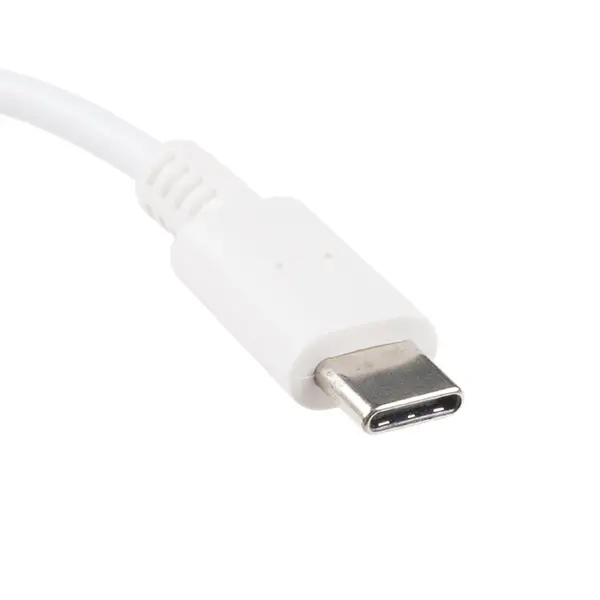 Image: SparkFun Electronics, CC BY 2.0, Wikimedia Commons
_-_49316581933.jpg)

In short: The modern, oval USB connector type that can be plugged in either way round and carries considerably more power and bandwidth than USB-A.
In more detail: USB-C is only the physical connector shape — behind it, different protocols can be at work (e.g. plain USB, but also DisplayPort video or Thunderbolt over the same port). With “USB Power Delivery”, even laptops can be charged through it at comparatively high power.
In Depth
Connector shape and protocol are separate things
Unlike USB-A/USB-B, “USB-C” strictly speaking describes only the physical connector shape (oval, symmetrical, insertable either way) — which capabilities a specific USB-C cable or port actually offers depends on the underlying protocol and cannot be seen from the outside. A cheap USB-C charging cable often only carries power and slow data rates (e.g. only USB 2.0 speed), while a high-quality USB-C cable can additionally support Thunderbolt (very high data rates, external graphics cards, several monitors over one cable), DisplayPort video or high Power Delivery wattage — this “USB-C cable chaos” is a well-known criticism of the standard, since two outwardly identical cables can differ drastically in function without laypeople being able to tell.
Alternate Mode: more than just USB
One of the most powerful features of USB-C is the so-called Alternate Mode: some of the physical contact pins in the connector can be dynamically reserved for a completely different protocol instead of USB data. This way the same USB-C port can carry plain USB, a DisplayPort video signal (directly, without a separate graphics output) or even HDMI — which mode is active is negotiated automatically by the two connected devices when they are plugged in. Thunderbolt (developed by Intel/Apple) goes even further and uses USB-C as the physical interface for an independent, far more capable protocol with PCIe passthrough — which even allows external graphics card enclosures to be connected over a single USB-C cable.
USB Power Delivery in detail
USB Power Delivery (USB-PD) allows dynamically negotiated charging power from a few watts (smartphone, approx. 5-20W) up to more than 240 watts (power-hungry gaming laptops) over the same cable — when connected, device and charger automatically negotiate the right voltage/current from a set of standardised profiles (e.g. 5V/9V/15V/20V with increasing current). This negotiation runs over an additional digital communication protocol directly over the USB-C line before any significant current flows — a safety mechanism that prevents a device from accidentally being damaged by too high a voltage.
EU-wide standardisation
Since 2024 the EU has required USB-C as the uniform charging port for most new small electronic devices (smartphones, tablets, headphones, cameras), in order to reduce the jumble of cables caused by earlier proprietary connectors (e.g. Apple’s Lightning port) — a rare example of regulation directly enforcing a technical industry standard, with the stated goal of reducing electronic waste from incompatible charging cables.
See also: USB, Docking stations