 EMZETT.
SNMP
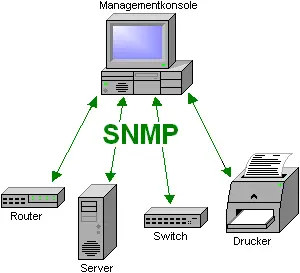 Image: Stefan Müller, CC BY 2.5, Wikimedia Commons

In short: Simple Network Management Protocol — a protocol for monitoring and controlling network devices such as routers, switches and printers remotely.
In more detail: Devices provide measured values (e.g. utilisation, error counters) via a standardised tree structure (MIB, management information base), which management software can query or be notified about via a trap. Frequently used in network monitoring tools in corporate environments.
In Depth
SNMP works on a simple question-and-answer principle: a management station sends GET requests to a device to retrieve a particular value from its management information base (MIB) (e.g. “how heavily is port 3 loaded?”), or SET requests to change a configuration. In addition, devices can send “traps” on their own — unsolicited notifications on certain events, e.g. “port 3 has just failed”, instead of the management station only noticing this by asking repeatedly (polling, see Poll/Push).
Older SNMP versions (v1, v2c) only authenticate with a kind of password in plain text (the “community string”), which represents a considerable security risk if SNMP is reachable unencrypted and unprotected on the network — an attacker could read along or even reconfigure devices. SNMPv3 fixes this with real authentication and encryption and should be preferred in modern networks.
See also: Network services, Troubleshooting